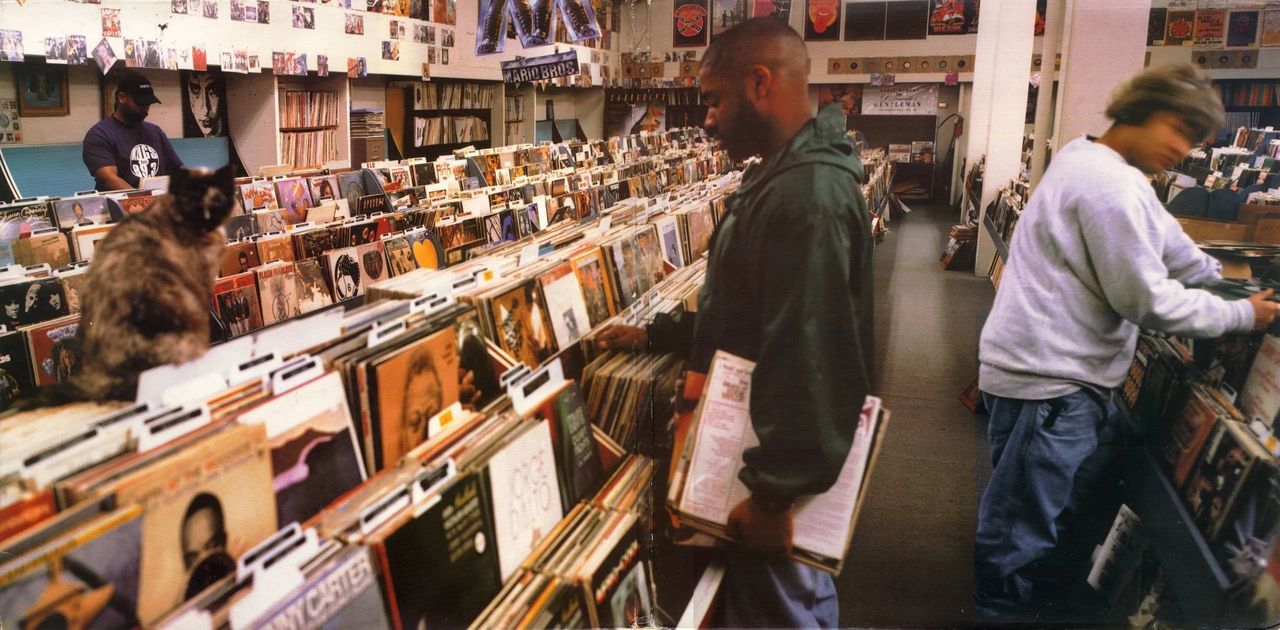
This week marks the 30th anniversary of DJ Shadow's landmark album "Endtroducing.....". Released in 1996, it remains a "reference audiophile disc" widely recognized among hi-fi enthusiasts—even in the age of digital streaming, its unparalleled sample collage texture is still irreplaceable. [1]
As the first studio album in history composed entirely of samples, the creation process of "Endtroducing....." is legendary. DJ Shadow used an Akai S950 sampler, turntables, and vintage records, extracting fragments from thousands of vinyl LPs, then weaving them through precise rhythmic arrangements and atmospheric layering to construct a dark, deep musical tapestry. This "pure sampling" approach means every sound originates from a physical medium. [1]
From an audio testing perspective, the album boasts an extremely wide dynamic range, rich low-frequency textures, and a wealth of subtle background noise. Whether it's the slowly rising piano loop in the opening track "Building Steam with a Grain of Salt" or the deep, powerful drum machine beats in "The Number Song," it reveals subtle differences in transient response, soundstage positioning, and low-frequency control of any system. Many audiophiles use it to test how well equipment reproduces that "analog warmth." [1]
Another test highlight of the album lies in its "imperfect" realism. Raw flaws such as vinyl crackle, tape hiss, and tonearm vibrations are deliberately retained, placing stringent demands on mid-high frequency resolution and background quietness. If the system is too bright or distorted, these "impurities" become harsh; conversely, proper gear can transform these imperfections into part of the music's texture. [1]
Editor's perspective: For audiophiles seeking non-mainstream test tracks, "Endtroducing....." is an excellent choice—it rejects polished studio refinement, presenting instead the most raw and experimental sampling art. Compared to common audiophile discs like "Hotel California" or "The Dark Side of the Moon," this album emphasizes low-frequency dynamics and micro-dynamics, making it more challenging for testing low-frequency control and background cleanliness. If your system excels at revealing the "temperature" of a recording rather than just the "data," this 30th anniversary edition is definitely worth getting. However, note that its relatively "dirty" sonic character may not suit users who prefer pristine sound. [1]